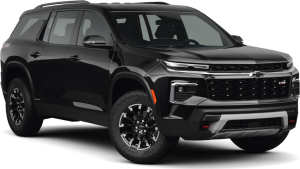
The 2026 Chevrolet Traverse LT and Honda Pilot Sport are both strong three-row SUVs, but they take different approaches to space, tech, and everyday family driving. The Traverse LT stands out with its class-leading cargo room, advanced infotainment system, and available hands-free driving technology, while the Pilot Sport leans into proven V6 performance and rugged all-wheel-drive capability. For families comparing a three-row entry-level comparison in the midsize segment, this matchup highlights comfort, versatility, and value in a true family SUV match built for real-world driving.
Southern California Chevrolet Dealers are here to help drivers compare the latest SUVs and find the right fit for their lifestyle across Ventura, Los Angeles, Riverside, OC, San Bernardino, and the Inland Empire. Whether you are shopping for a new Chevy Traverse LT or exploring other Chevrolet models, our team is ready to assist with sales, service, parts, and ongoing support. Contact us today or stop by one of our 44 locations to get personalized help and a closer look at your next SUV.
Exterior Design and First Impressions on the Road
When comparing the Traverse LT vs. the Honda Pilot Sport 2026, the first thing most drivers notice is how differently each SUV presents itself on the road. One leans into a modern, sculpted look with a more refined street presence, while the other emphasizes rugged, traditional SUV styling that signals durability and outdoor readiness.
The Chevrolet Traverse takes a more contemporary approach, with clean body lines, a wide stance, and a design that feels equally at home in downtown Los Angeles or along coastal Ventura highways. It is the kind of SUV that does not try too hard, but still stands out in a parking lot full of crossovers.
The Pilot Sport, on the other hand, leans into a bolder, more rugged identity. It has a stronger grille presence and a more upright profile, which appeals to drivers who want a classic SUV feel with a modern update.
Key Exterior Differences at a Glance
Chevrolet Traverse
- Sleek, modern SUV design with a refined profile
- Clean lines that fit urban and suburban driving
- Strong road presence without being overly aggressive
Honda Pilot Sport
- More rugged, traditional SUV styling cues
- Upright stance with a bold front fascia
- Designed to emphasize durability and outdoor capability
Real-World First Impressions in Southern California
In everyday driving across places like Orange County freeways or Riverside surface streets, design is not just about looks. It affects how the vehicle feels in traffic, parking structures, and tight residential neighborhoods. The Traverse tends to feel more streamlined and city-friendly, while the Pilot Sport projects a more commanding road presence.
Drivers often notice the Traverse blends in seamlessly during daily commutes but still turns heads when parked along a beach in San Bernardino County or Ventura’s coastal areas. That balance of style and practicality makes it especially appealing for families who want versatility without sacrificing modern design.
A Closer Look at What Matters Most
When evaluating first impressions, it helps to focus on what actually impacts ownership:
- Visibility and road confidence in busy LA traffic
- Ease of parking in tighter OC neighborhoods
- Overall styling that still feels fresh years after purchase
- Every day practicality for school runs, errands, and weekend travel
Choosing What Fits Your Lifestyle
For many shoppers comparing these two, the decision often comes down to personal taste and daily driving habits. If you prefer a refined, modern SUV that fits naturally into both city and highway life, the Traverse makes a strong case. If a more rugged and traditional SUV look feels right, the Pilot Sport delivers that direction.
Interior Space, Seating, and Everyday Family Comfort
When it comes to family life, interior space often matters more than exterior styling. This three-row entry-level comparison between the Traverse LT and Pilot Sport shows how both SUVs approach comfort, flexibility, and day-to-day usability in very different ways.
Inside the Chevrolet Traverse, the focus is on maximizing usable space without making the cabin feel bulky or complicated. It is designed for real families who are constantly loading passengers, sports gear, groceries, and everything in between.
Cabin Space and Layout Differences
Chevrolet Traverse
- Spacious three-row layout with flexible seating options
- Easy access to the third row for kids and adults
- Designed with cargo-first practicality in mind
Honda Pilot Sport
- Comfortable three-row configuration with a traditional layout
- Emphasis on balanced passenger comfort and utility
- Strong reputation for family-friendly seating arrangements
Everyday Life in Southern California
Think about a typical day in Los Angeles or Orange County. Morning school drop-offs, afternoon sports practices, and weekend trips out to Riverside or Ventura all require a cabin that adapts quickly.
The Traverse stands out in these situations because of how easily the seats fold and how open the cabin feels when fully loaded. It reduces the hassle of constantly rearranging space, which becomes a real advantage for busy families.
Key Comfort and Convenience Highlights
- Flexible seating for passengers and cargo at the same time
- Wide door openings for easier entry and exit
- Third-row usability that does not feel like an afterthought
- Practical layout for strollers, backpacks, and travel gear
Designed for Growing Families
Both SUVs are built with families in mind, but they prioritize different experiences. The Traverse leans into maximizing space and simplicity, while still keeping comfort in every row. That makes it especially appealing for families who are always on the move across the Inland Empire or San Bernardino.
Technology and Connectivity for Daily Driving
In today’s driving experience, technology plays a major role in how enjoyable and stress-free every trip feels. When looking at this family SUV match, both the Traverse LT and Pilot Sport bring strong tech packages, but they approach connectivity in different ways.
The Chevrolet Traverse focuses on a large, intuitive digital experience designed to simplify everything from navigation to entertainment.
Tech Experience Inside the Cabin
Chevrolet Traverse
- Large central touchscreen designed for quick access
- Built-in Google integration for maps, apps, and voice commands
- Driver-focused digital displays for key vehicle information
Honda Pilot Sport
- Modern infotainment system with smartphone integration
- Google built-in available depending on configuration
- Honda-focused digital interface designed for ease of use
Built for Real-World Driving in Southern California
Technology matters most when traffic gets heavy. Whether you are stuck on the 405 in Los Angeles or navigating busy OC freeways, quick access to navigation, music, and hands-free communication makes a real difference.
The Traverse is designed to reduce distractions by keeping controls simple and responsive. That means fewer menu dives and more time focusing on the road ahead.
Everyday Tech Features That Stand Out
- Seamless smartphone integration for calls and messaging
- Voice-controlled navigation for hands-free route changes
- Rear-seat connectivity options for passengers on longer drives
- Clear digital displays that are easy to read in bright sunlight
Making Every Drive Easier
From Ventura weekend trips to Inland Empire commutes, technology is not just a feature anymore; it is part of the driving experience. The Traverse helps streamline daily routines by keeping everything connected and easy to access.
Performance, Engine Power, and Driving Feel
When comparing the Traverse LT vs Honda Pilot Sport 2026, performance is where the personalities of these two SUVs really separate. Both are built for family duty, but they deliver power and driving feel in noticeably different ways.
The Chevrolet Traverse is tuned for smooth, confident acceleration and relaxed highway cruising, which fits well with long commutes across Los Angeles County or weekend drives out toward Ventura. It focuses on steady power delivery that feels composed, even when the vehicle is fully loaded with passengers and cargo.
The Pilot Sport takes a more traditional approach with its V6 setup and tuned transmission, offering a familiar SUV driving feel that many drivers still appreciate.
Engine and Performance Overview
Chevrolet Traverse
- Turbocharged engine designed for strong low-end torque
- Smooth 8-speed automatic transmission
- Balanced performance for city and highway driving
- Built for confident merging and passing on busy SoCal freeways
Honda Pilot Sport
- Naturally aspirated V6 engine
- 10-speed automatic transmission
- Traditional SUV power delivery with steady acceleration
- Emphasis on consistent, predictable driving response
What It Feels Like Behind the Wheel
Driving through Riverside traffic or merging onto the 405 in Orange County highlights how each SUV behaves under pressure. The Traverse feels more modern in its power delivery, with quicker response when you need it most, especially during passing or uphill climbs.
The Pilot Sport delivers a more classic SUV feel, steady and controlled, which appeals to drivers who prefer a familiar driving rhythm rather than a more responsive turbocharged setup.
Everyday Driving Scenarios
- Smooth freeway cruising between San Bernardino and Los Angeles
- Stop-and-go traffic during rush hour commutes
- Highway merging during weekend trips out of the Inland Empire
- Fully loaded family travel with passengers and cargo
Choosing Based on Driving Style
If you prefer a more modern, responsive feel that adapts well to fast-moving California highways, the Traverse is built to match that rhythm. If you prefer a traditional SUV experience with steady, predictable power, the Pilot Sport delivers that confidence.
Capability, AWD Systems, and Road Versatility
Capability is where these two SUVs show how differently they are designed for family life. This three-row entry-level comparison highlights how each model approaches all-weather driving, road confidence, and weekend versatility.
The Chevrolet Traverse focuses on stability, comfort, and control, making it well-suited for both city driving and long-distance highway travel across Southern California. It is designed to handle daily routines while still being ready for occasional adventures.
The Pilot Sport leans more toward traditional SUV capability, with systems designed to support varied terrain and outdoor-focused driving.
All-Wheel Drive and Control Systems
Chevrolet Traverse
- Available AWD system tuned for stability and traction
- Designed for confident highway and wet-road performance
- Smooth handling for family travel and daily commuting
Honda Pilot Sport
- Available AWD system with terrain-focused driving modes
- Built for enhanced traction on varying surfaces
- More emphasis on off-pavement confidence and control
Real-World Driving Across Southern California
Capability is not just about off-road trails. In places like San Bernardino mountain roads or rainy Inland Empire commutes, traction and stability matter every day.
The Traverse prioritizes predictable handling and comfort, especially during long freeway drives between Ventura, OC, and Los Angeles. It feels stable at higher speeds and remains composed when the vehicle is fully loaded.
The Pilot Sport offers added confidence in changing terrain conditions, especially when roads become uneven or weather conditions shift.
Where Each SUV Fits Best
Chevrolet Traverse
- Long highway drives across Southern California
- Family road trips with heavy cargo
- Daily commuting in traffic-heavy regions
Honda Pilot Sport
- Mixed driving conditions with occasional rough terrain
- Outdoor trips require added traction confidence
- Drivers who prefer traditional SUV capability feel
Making the Right Choice for Your Lifestyle
Both SUVs are capable, but they are tuned for different expectations. The Traverse leans toward comfort and road stability, making it a strong match for everyday family life in busy California cities. The Pilot Sport focuses more on traditional SUV versatility.
Safety Features and Driver Assistance Systems
Safety is one of the most important factors when choosing between the Traverse LT vs Honda Pilot Sport 2026, especially for families driving through busy Southern California traffic. Both SUVs come equipped with advanced driver assistance systems, but they approach safety with slightly different philosophies.
The Chevrolet Traverse is designed with a wide suite of standard safety and driver support features that help reduce stress in everyday driving. From crowded Los Angeles freeways to school pickup lines in Orange County, these systems are built to keep awareness high and reactions quick.
The Pilot Sport also delivers a strong safety package through Honda’s well-known Honda Sensing system, which focuses on core driver assistance essentials and smooth intervention when needed.
Key Safety Features Comparison
Chevrolet Traverse
- Chevy Safety Assist standard suite
- Forward Collision Alert and Automatic Emergency Braking
- Lane Keep Assist with Lane Departure Warning
- Blind Zone Steering Assist
- Rear Cross Traffic Alert and Rear Park Assist
- More than 20 standard safety and driver assistance features
Honda Pilot Sport
- Honda Sensing suite of driver assistance technologies
- Collision Mitigation Braking System
- Lane Keeping Assist System
- Adaptive Cruise Control
- Road Departure Mitigation System
Real-World Safety in Southern California
Daily driving in areas like Riverside or San Bernardino often means unpredictable traffic patterns, sudden lane changes, and stop-and-go congestion. Both SUVs are built to help drivers stay aware, but the Traverse leans into a broader set of standard features that reduce the need to upgrade trims for added protection.
For families navigating busy school routes in Ventura or freeway commuting in Los Angeles, these systems act as an extra layer of confidence behind the wheel.
Why Safety Tech Matters in This Comparison
- Heavy freeway traffic increases the need for lane and blind spot support
- Urban driving requires strong pedestrian and collision detection
- Long commutes benefit from adaptive cruise and driver alerts
- Family-focused SUVs must prioritize consistent protection across all rows
Cargo Space, Practical Use, and Everyday Flexibility
When it comes to daily life, cargo space often becomes the deciding factor in a three-row entry-level comparison. Between sports gear, groceries, strollers, luggage, and road trip essentials, families in Southern California need an SUV that adapts quickly.
The Chevrolet Traverse stands out in this category with one of the most spacious interiors in its class, designed specifically to handle growing family needs without constant rearranging.
Cargo Capacity and Flexibility
Chevrolet Traverse
- Up to 98 cubic feet of maximum cargo space
- Wide, open load floor for easy packing
- Flat-folding seats for quick configuration changes
- Designed for large family cargo needs without compromise
Honda Pilot Sport
- Strong cargo flexibility across three rows
- Up to approximately 87–113 cubic feet, depending on configuration
- Smart storage compartments and hidden underfloor space
- Balanced focus between passenger comfort and cargo utility
Everyday Scenarios Across Southern California
Think about a weekend in Ventura with beach chairs, umbrellas, and coolers. Or a shopping trip through OC with a full load of groceries and sports equipment. Even a family road trip from the Inland Empire to San Diego requires space that adjusts quickly.
The Traverse makes these transitions easier because of its wide interior layout and simple seat-folding design. Instead of struggling to reconfigure space, drivers can adapt the cabin in seconds.
Practical Advantages That Matter Most
- Easy loading for bulky items like strollers or sports gear
- Third-row usability without sacrificing cargo space entirely
- Flat load floor for road trip luggage and storage bins
- Convenient access for daily errands and family schedules
Built for Real Family Life
Both SUVs are practical, but they approach usability differently. The Traverse prioritizes maximum space and simplicity, which is especially helpful for larger families or anyone frequently traveling with full cargo loads across Los Angeles or Riverside.
Pricing, Value, and Ownership Experience in 2026
Price and long-term value often play a major role in final decisions, especially when comparing two strong midsize SUVs like the Traverse LT vs the Honda Pilot Sport 2026. While both models sit in a similar price range, their value propositions differ in terms of features, space, and included technology.
The Chevrolet Traverse typically starts at a lower base price while offering a strong set of standard features, making it an appealing option for families who want more included value upfront.
Ownership Value in Everyday Use
In Southern California, ownership experience goes beyond MSRP. It includes maintenance access, dealership support, fuel efficiency, and long-term comfort with the vehicle.
The Traverse benefits from a wide dealership network across Ventura, Los Angeles, Riverside, Orange County, San Bernardino, and the Inland Empire, making service and support more convenient for many drivers.
Key Value Considerations
- Standard features are included without needing higher trims
- Interior space that supports long-term family growth
- Competitive pricing for a full three-row SUV experience
- Easy access to service and support across Southern California
What This Means for Buyers
For families prioritizing space, technology, and everyday practicality, the Traverse often delivers more standard value at its price point. The Pilot Sport remains a strong competitor, especially for those who prefer its traditional SUV feel and brand familiarity.
How do Traverse LT and Honda Pilot Sport compare on family features?
The Traverse LT focuses more on space, tech, and flexible seating, while the Honda Pilot Sport emphasizes traditional SUV comfort and practicality.
Which base three-row trim offers more seating comfort?
The Chevrolet Traverse LT offers more spacious seating and easier access to the third row, making it more comfortable for larger families.
How do cargo and third-row space compare?
The Traverse LT provides up to 98 cu. ft. of cargo space with a more open third row, while the Pilot Sport offers strong overall cargo flexibility but a more traditional third-row layout.
Which provides better standard safety tech?
The Traverse LT includes more than 20 standard safety and driver assistance features, while the Pilot Sport uses Honda Sensing with a solid but simpler standard suite.
Find Your Next Chevrolet Traverse at Your Local SoCal Chevy Dealer
Choosing between the Traverse LT and Pilot Sport comes down to space, tech, and how you drive across Southern California. Both are strong three-row SUVs, but the right fit depends on your daily needs.
Southern California Chevrolet Dealers, serving Ventura, Los Angeles, Riverside, Orange County, San Bernardino, and the Inland Empire, make it easy to explore the Chevrolet Traverse in person. With 44 locations, you can compare trims, test drive, and get expert help nearby.
You can also continue your research with comparisons like the Chevy Trax RS vs Corolla Cross XLE, the Chevy Trax ACTIV vs Corolla Cross LE, and the Traverse vs Grand Highlander to see how Chevrolet SUVs stack up across different segments.
Contact Southern California Chevy Dealers
Disclaimer: All information is provided for general informational and entertainment purposes only. While we strive for accuracy, we cannot guarantee that all content is complete, current, or error-free. Any reliance you place on such information is strictly at your own risk. This article may include opinions and is not endorsed by, or officially affiliated with, any vehicle manufacturer or brand. Always consult official sources – such as the vehicle’s owner’s manual, authorized dealerships, or certified professionals – for the most up-to-date and personalized information.